Those who are Polyamorous

Those who are Polyamorous are those who crave having multiple intimate romantic and/or sexual relationships that are rooted in honesty, loyalty, commitment, consent, affective responsibility, emotional intelligence and communication. Those who seek connections shaped by free will, freedom, independence, and autonomy.
Those who believe that love should not be limited or constrained by selfishness, jealousy, insecurity, trauma, power, egocentrism, control, fear, possessiveness, narcissism, egotism, arrogance, or societal norms.
Those who question the imposed indoctrination of monogamy, patriarchy, religion, sexism, heterosexuality, colonialism, racism, capitalism, and the nuclear family as the only way to live, to love, and to be loved.
Those who are devoted to continuously improving themselves and their relationships; who are willing to put in the work required to build healthy relationships; who have the courage to confront their trauma, the maturity to pursue emotional health, and the capacity to be empathic and patient throughout their growth and deconstruction process and that of their partners.
Polyamory is emancipatory, liberating and empowering

Polyamory books to read first


Mono in a Poly World
This is a guidebook and resource for those navigating monogamous-polyamorous relationships. This book covers the basics of polyamory, transitioning to polyamory and the issues that make mono-poly relationships challenging. Additionally, best practices and worst practices in consensual non-monogamy are explored, providing a roadmap for healthy relationships with compromises that can meet the needs and desires of both partners.
Tazmyn OzgaMy review
It's the perfect introduction to polyamory and the perfect, concise, spot on, brief and kind manual of polyamory. It's for monogamous people who have a polyamorous partner, for mono people who are considering polyamory, and for polyam people with a mono partner. It's a must read even for people who already are polyam/non-monogamous, and honestly, every monogamous person should read it too. I recommend for this to be the first book you read if you are entering this new polyam world. It's truly a gem. I loved it.
Kindle
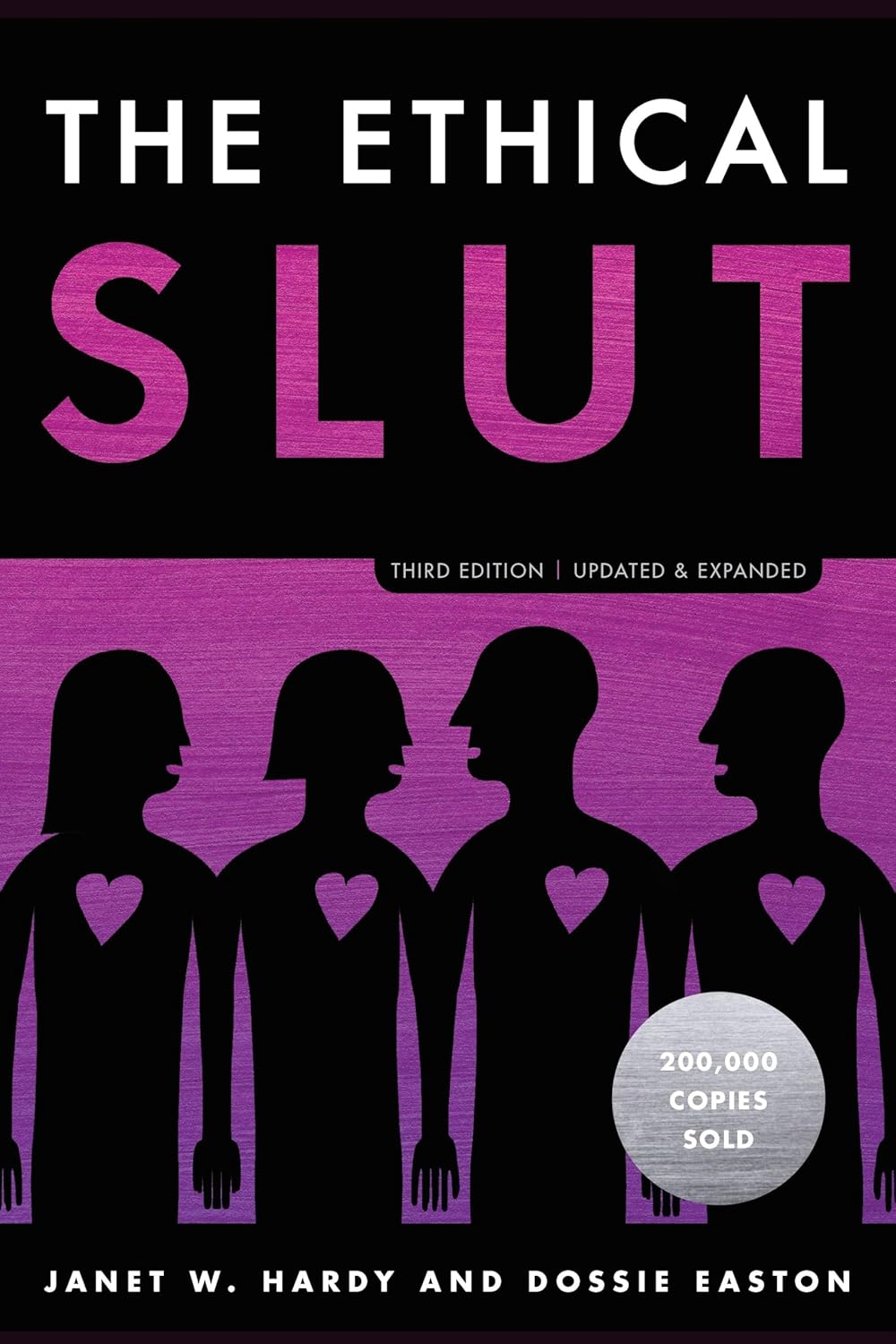

Ethical Slut
The guide of choice for people curious to move beyond conventional monogamy, and for anyone interested in learning better skills for love, sex and intimacy. It will open you up to the adventure and freedom that comes from redefining the way you relate to friends and lovers. It offers techniques, skills and ideals authors have developed for practicing successful and ethical polyamory through open communication, emotional honesty and managing jealousy.
My review
The bible of polyamory. This is a more complete guide of polyamory and non-monogamy; a compilation of knowledge and practices. It's feminist, lgbtqia+, sex positive, intersectional and kinky. A must read for anyone interested in healthy relationships. I recommend it even if you are a monogamous person who wants to improve yourself, your relationships and learn how to communicate better, manage jealousy, dismantle possessiveness and be more honest, open and emotionally healthy.
Kindle
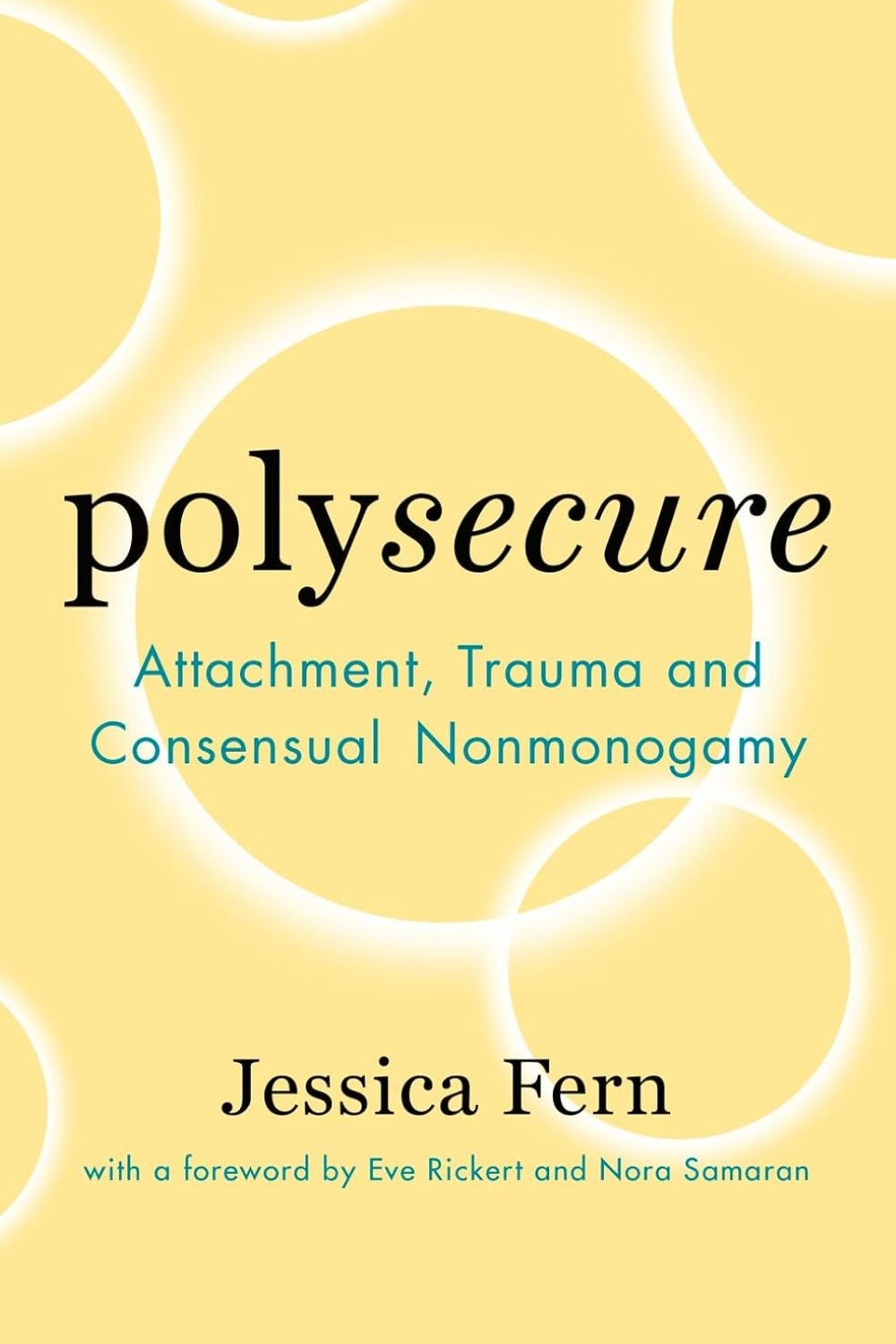

Polysecure
Using her nested model of attachment theory and trauma, Jessica expands our understanding of how emotional experiences can influence our relationships. Then, she sets out six specific strategies to help you move toward secure attachments in your multiple relationships. This is a theoretical treatise and a practical guide to emotional health, emotional intelligence, self-improvement, growth, acquiring tools & skills, and having healthy relationships.
Jessica FernMy review
It's an eye-opener. I didn't really realize that we ALL need to learn, urgently, about attachment theory. It improved my life. I not only was able to understand myself better, but also, it allowed me to empathize better with literally everyone. This is the book to read if you want to acquire emotional health. This is the book you need to read if you, your partner or whoever in your life is struggling with personal and/or family traumas, jealousy, possessiveness, control, or other emotional challenges. I can't recommend it enough.
Kindle
Love is abundant and unlimited

Polyamory types
Egalitarian
All partners are valued equitably, and there is no hierarchy or ranking of importance. Decisions are made collectively, and each person's needs and desires are considered just as crucial as those of others. This doesn't mean that all relationships are the same, but that they are all treated reasonably, justly, and with as much fair consideration as possible. Affective responsibility and transparency are emphasized.
Hierarchical
Relationships are structured with primary, secondary, and/or tertiary partners. Primaries have a higher level of commitment, importance and involvement, while secondaries and tertiaries have less influence on major life decisions. Some partners have more priority than others. Some people just don't want the responsibility of being primary and accept this arrangement. As long as everyone is aware and consents, it's valid.
Relationship Anarchy
It’s a philosophy that rejects traditional relationship norms, obligations, structures, hierarchies, labels, duties, and expectations. They don't prioritize people based on romantic and/or sexual relationships, friendships or family ties. No one is more important. Relationships are defined freely by the two (or more) people in it. Consent, honesty, and communication are key. You can be polyamorous and/or Relationship anarchy.
Nesting
A nesting partner is someone you live with. You may or may not co-parent, share finances, responsibilities, resources, routine. You can have romantic and/or sexual relationships with other people outside your nest. For many people, nesting offers stability, closeness, and a sense of chosen family. Boundaries and communication skills are required. In polyamory, you can nest/live with multiple partners. Very anti-capitalist of them.
Lap-sitting
All partners and all metamours share strong emotional bonds, intimacy, physical affection and spend time together frequently. They get involved in each other's business. They are lovers and/or friends. They love, care for and appreciate one another. Metamours may or may not be sexually and/or romantically involved, but they all have deep connections with each other. This is the utopia of polyamory for a lot of people.
Kitchen-table
All metamours and all partners are comfortable with each other, often sharing meals, conversations, events, and/or hobbies. They all enjoy spending time together. They can be friends, but not necessarily. Metamours maintain separate individual relationships and boundaries and do not get involved with their partners’ relationships. More than garden-party, less than lap-sitting. It's the in-between.
Garden-party
Metamours are aware of each other. They are friendly, polite, and respectful in shared spaces like social events, family gatherings, and other activities. They don't pursue friendships, romantic and/or sexual relationships with other metamours. They can all be in the same room comfortably and joyfully, but they do not form connections with their partners’ partners. The least they can do is be friendly. Very healthy of them.
Polyfidelity
Three, four or more people form a closed, exclusive group and agree not to pursue any outside romantic and/or sexual partners beyond those within the group, unless everyone involved in the group consents to it. Not all of them are romantically and/or sexually involved with each other but they can be. Monogamy with extra participants. They just expand the number of people being restricted, controlled, and limited.
Solo-polyamory
They prioritize their independence, autonomy, personal time, space, income, work, studies, goals, and friends and family. They don't want a couple-centered life, cohabitation, shared finances, co-parenting, or other merged-life types of relationships. They want to have deep intimacy, and romantic and/or sexual relationships, but these aren't the most important things for them. What they want for their lives matters most.
Mono-poly
A monogamous person is in a relationship with a polyamorous person. The monogamous person does not have other romantic and/or sexual relationships with anyone else, by their own free choice. However, they accept that their polyamorous partner has other romantic and/or sexual partners, and have no problem with it. As long as everyone is aware and consents, it's valid and can be healthy.
Parallel
Couples who don't want to meet or interact in any way with their metamours. They don't want any involvement from any of their partners in any of their other relationships. They value privacy, boundaries, discretion, autonomy, individuality, and independence. Doesn't mean they won't talk about other partners. This is not the healthiest type, but it can be healthy for some people. As long as everyone is aware and consents, it's valid.
Don’t Ask, Don’t Tell
People who have many romantic and/or sexual relationships but won’t tell their partners anything about their relationships with other people. They also don't want to know anything about what their partners do, with whom, where, when, why, or how. This isn't the healthiest, but can be healthy and even necessary. It's mostly for jealous, insecure and anxious people. Can be a good starting point for polyamory newbies.
One-penis policy
A couple who agree that they will only be sexually and/or romantically involved with one penis, the one within the couple. They can have as many romantic and/or sexual relationships with people with vulvas as they want, but no additional penises. For straight couples, this is the chauvinistic way of doing non-monogamy. It contradicts the principles of polyamory, since it involves control, power, machismo, and limitation.
Veto Power
A couple that has the power to veto each other's partners and/or potential partners. Whether romantic and/or sexual. They give their partner the authority to prohibit certain behaviors and/or activities with other partners. In most cases, they also give the authority to reject potential partners and/or force breakups with current partners. It goes against the control-free principles and freedom that polyamory stands for.
Non-monogamy
Polyamory falls under the non-monogamy umbrella. All forms of polyamory are non-monogamous, but not all forms of non-monogamy are polyamory. Like sexuality, non-monogamy exists on a spectrum. Across this spectrum, common values often include awareness, consent, mutual agreements, boundaries, assertive communication, honesty, transparency, and autonomy.
A fundamental difference is that polyamory embraces both sexual and romantic freedom, while most (not all) forms of non-monogamy focus only on sexual openness. Most of them do not permit the exploration of intimacy and emotional/romantic relationships or connections outside the primary relationship.
That means, in some ways, they can still be controlling, selfish, jealous, restrictive, limiting, unjust, unfair, possessive, insecure, power-seekers, egocentric, egotistical, arrogant, and/or narcissistic. In all fairness, polyamory has a few types that can be like that too. And also, in all fairness, there are still many people in polyamory who are like that in some way.
What matters is being aware of it and working on it. Trying our best to outgrow, deconstruct and unlearn those harmful and unhealthy behaviors and trauma patterns. To develop the skills needed to cultivate the emotional health that fosters fulfilling, nurturing and healthy relationships. Whether monogamous, non-monogamous or polyamorous, we should all aspire to be better and freer, and make space and support, or at least not hinder our partners in doing the same.
Overlapping types
Two or more of these polyamory styles can coexist within the same relationships or polycules. They are not mutually exclusive, and in practice, many people combine them to fit their needs, desires, and boundaries.
You can be Hierarchical, Parallel and have Veto power. You can be Nesting and practice Don’t ask, Don’t tell. You can be Polyfidelity and Egalitarian. You can be Solo-polyam and Kitchen-table. You can be Lap-sitting and Relationship Anarchy. You can be Mono-poly, follow a One-penis policy and practice Garden-party. You can be married and practice any of these relationship styles simultaneously. These relationship structures often overlap, intersect, and can evolve over time, depending on the people involved.
The general principle in polyamory is that if everyone involved is aware of the arrangement and consents to all the arrangements, then it is considered valid. Consent, transparency, and mutual agreement are the foundation.
But make no mistake, awareness and consent do not automatically make something healthy, ethical, or free from harm. There are many ways to practice polyamory that still involve control, restriction, imbalance, and/or unfair dynamics. Awareness and consent are the baseline, but the affective responsibility that we have with our partners, the emotional health we cultivate, the communication skills we develop, and the care, respect, love, empathy, and support we offer to our partners and metamours within those structures is what truly defines the quality and ethics of the relationship.